Contact

Innovative Packaging in FMCG

Introduction

The global FMCG packaging market, valued at US $794 billion in 2024, is projected to reach US $1.1 trillion by 2033 (IMARC Group, 2024). FMCG packaging today is at a turning point—while it remains essential for product protection and branding, it also faces growing pressure to reduce waste, as the sector contributes to nearly 50% of global plastic waste (UNEP, 2022). At the same time, consumer behavior is shifting, with 82% of buyers willing to pay more for sustainable packaging (Trivium Packaging, 2023). In this context, innovative packaging is not just a trend but a necessity, helping FMCG companies balance sustainability, convenience, and customer expectations.

Unpacking Innovation: Top Brands Leading the Packaging Revolution

Company Innovation Impact
Coca-Cola QR-Enabled Personalized Packs Coca-Cola’s “Share a Coke” campaign uses on-pack QR codes for personalized digital experiences and interactive content.
Kellogg’s Interactive & Playful Packaging Design Kellogg’s partnered with Graphic Packaging International to enhance the Disney’s Frozen 2 cereal carton with holographic laminated board.
IKEA Mushroom-Based Packaging Exploring biodegradable mycelium-based packaging for protective secondary packaging.

Why Packaging Innovation Matters in FMCG

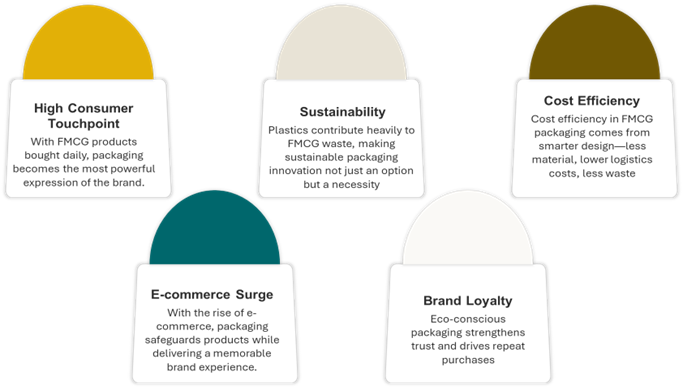
In the fast-moving consumer goods (FMCG) sector, packaging innovation is a critical driver of success. It is the primary brand differentiator on crowded shelves and the key touchpoint for consumers making daily purchases. Furthermore, with immense pressure to reduce plastic waste, sustainable packaging is no longer a niche concern but a core business necessity that builds trust and loyalty. Finally, innovation drives cost efficiency through smarter design and meets the unique demands of the e-commerce supply chain, making it essential for both profitability and growth.


Current Trends in FMCG Packaging Innovation

Smart & Interactive Packaging
Goal: Engage users & build loyalty.
Tech: QR Codes (info, recipes), NFC (tap to authenticate),
AR (immersive experiences).
Example: Beverage labels offering music mixes or cocktail recipes.

Minimalist & Lightweight Packaging
Goal: Reduce materials, cost, & environmental footprint.
Focus: Compact designs, concentrated formulas, eliminating excess.
Example: Removing unnecessary outer cartons or using thinner, stronger materials.

Personalized Packaging
Goal: Create unique emotional connections.
Focus: Digital printing for names, limited editions, and seasonal themes.
Example: Coca-Cola’s ‘Share a Coke’ with popular names.

Eco-Friendly Materials
Goal: Achieve circularity & reduce plastic waste.
Focus: Biodegradables (seaweed, cornstarch), Recycled Content (rPET), Paper-Based alternatives.
Example: Colgate’s recyclable paper toothpaste tube.

Reusable & Refillable Models
Goal: Eliminate single-use packaging.
Focus: Durable containers, in-store refill stations, subscription models.
Example: Refill stations for laundry detergent, coffee, and shampoo.

Facts & Insights

Fact Source
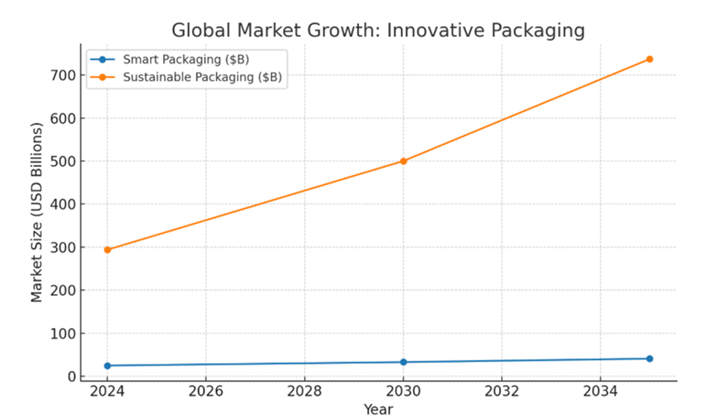
Smart packaging growth ($26B → $40B by 2035) Future Market Insights, Spherical Insights & Consulting (Future Market Insights)
Sustainable packaging doubling ($313→ $557B by ~2034) Towards Packaging, The Research Insights (Towards Packaging)
82% willing to pay more for sustainable packaging; 82% among Gen-Z Packaging Tech Today; Buying Green Report (Packaging Technology Today)
71% chose products due to sustainable packaging in past 6 months Buying Green Report; Packaging Tech Today (Packaging Technology Today)

Estimated Carbon Footprint Reduction from Sustainable Packaging Shifts


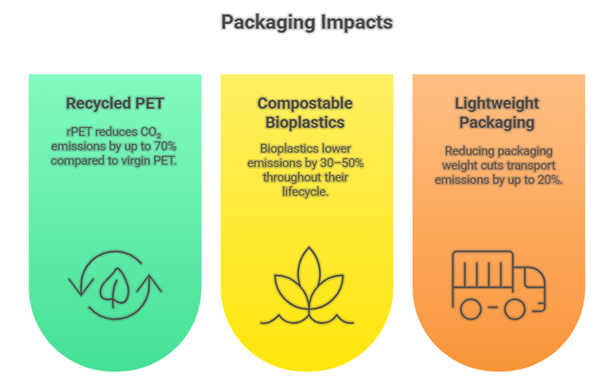
Globally, shifting to sustainable packaging can reduce carbon emissions by up to 50% by minimizing plastic production and waste. Eco-friendly alternatives like bioplastics and recycled materials play a crucial role in this reduction.


Global Impact at Scale
If just 25% of FMCG packaging worldwide shifts to sustainable alternatives by 2030, the potential reduction could exceed 1 billion metric tons of CO₂ annually – equivalent to taking 220 million cars off the road every year.

Global Market Growth: Smart vs Sustainable Packaging

Source: Future Market Insights, 2024; Towards Packaging, 2024

Conclusion

In FMCG, innovative packaging is no longer optional—it is essential. From self-dissolving sachets to plant-based bottles, compostable snack packets, and refill models, packaging innovation is reshaping the industry. By aligning with consumer demand for sustainability, enhancing convenience, and leveraging technology, FMCG companies can strengthen brand loyalty while reducing environmental impact. The future of FMCG packaging lies in solutions that are eco-friendly, smart, and consumer-centric—ensuring packaging is not just functional, but a driver of growth and responsibility.

How We Work with You

1

Project-Based
Consulting

One-off consulting engagements to solve specific business challenges.

2

Ongoing
Retainer Services

Continuous support and consulting as a trusted partner for long-term projects.

3

Staff
Augmentation

Providing expert resources to support your in-house teams for large or complex projects.

4

Custom
Engagements

Tailored service models based on client needs, ensuring flexibility and value.

Explore how our services can help your business thrive.

Get Started